Shadow Dungeon Classes: Which One Should You Pick?
Compare Mage, Paladin, Ranger, and Necromancer by combat role, range, summons, talent scope, and the play style each class rewards.
Direct answer
Pick Mage for ranged elemental spells, Paladin for close dual-blade combat, Ranger for precision ranged weapons, or Necromancer for demon and skeleton summons.
Quick answer
- Mage is the ranged spellcaster.
- Paladin is the close-range dual-blade fighter.
- Ranger is the precision ranged weapon class.
- Necromancer is the dedicated summon class.
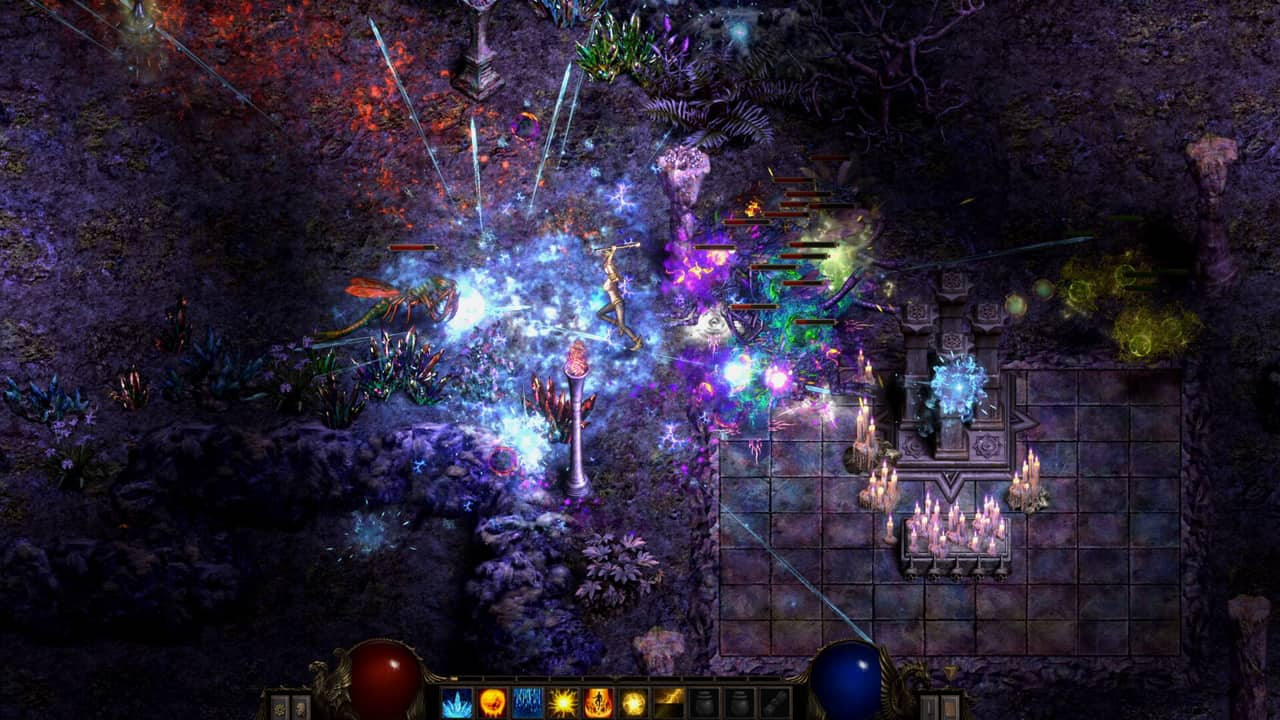
Shadow Dungeon Classes at a Glance
Shadow Dungeon has four playable classes at launch. Treat the class screen as a choice between four combat delivery systems. Your first decision is how you want to apply damage and manage enemy pressure; the talent trees refine that choice afterward.
| Class | Core combat loop | Working distance | Pressure management | Pick this class if you want... |
|---|---|---|---|---|
| Mage | Elemental spellcasting | Ranged | Control space and reposition | Spell-led damage without staying in melee range |
| Paladin | Dual-blade weapon and skill loops | Close range | Layer defensive effects through the build | Active melee pressure and direct contact |
| Ranger | Precision ranged weapon attacks | Ranged | Maintain distance and movement | Weapon-focused damage with room to kite |
| Necromancer | Demons, skeletons, and supporting skills | Indirect through summons | Let summons occupy enemies while you move | A minion-led loop with less direct engagement |
Choose by Combat Loop
Start with the action pattern you want to repeat in every fight. Each class has three talent trees, so the base class is a direction rather than a single fixed build. A comfortable core loop gives you room to experiment as those trees open more choices.
Cast and control space
Choose Mage for ranged elemental magic and a spell-led approach to controlling a room.
Best for: Players who want elemental casting and distance
Stay close and keep attacking
Choose Paladin for a holy dual-blade fighter built around close weapon and skill loops.
Best for: Players who enjoy active melee pressure
Fight at range with weapons
Choose Ranger for precise ranged attacks, movement, and distance-based pressure management.
Best for: Players who prefer weapon damage and spacing
Let minions hold attention
Choose Necromancer when demons and skeletons should carry the main combat loop while you support them.
Best for: Players who want a dedicated summon style
Avoid choosing from a launch-week tier list. Early community impressions disagree about which class is strongest, and every class can branch through three talent trees. A preferred action pattern is a more stable starting criterion than one early balance report.
Ranged and Summon Options
Choose Necromancer when summons are the priority. Demons and skeletons define the class, and current player reports describe the same summon-led pattern in the launch version.
For direct ranged combat, choose between two different loops. Ranger uses precise ranged weapon attacks and movement.
Mage delivers ranged elemental magic and controls space through spellcasting. The deciding question is whether you want weapons or spells to remain at the center of the build.
See the class screen and an early Necromancer run
Watch the character creation screen present all four starting options, then follow an early Necromancer session that shows the summon-led combat context.
The video above is useful for seeing the class choice in context. Its Necromancer run does not rank the other three classes, so use the comparison table for the full four-class decision.
Complete Class Profiles
The launch roster has twelve talent trees and more than 370 skills across four classes. That gives every class three trees and makes the profile below a starting identity, not the limit of what the class can become.
Class 1 of 4
Mage
A ranged elemental spellcaster that controls space and avoids direct pressure.
- Role
- Elemental spellcaster
- Range
- Ranged
- Defense
- Space control and movement
- Talent structure
- Three class trees
Best fit
Choose Mage when you want ranged elemental damage and room to reposition while enemies are controlled.
Build direction
Prioritize one repeatable spell loop, then align item damage, cooldown support, and skill modifiers with it.
Class 2 of 4
Paladin
A holy dual-blade fighter built around close-range weapon and skill loops.
- Role
- Holy dual-blade fighter
- Range
- Close range
- Defense
- Layered defensive skill effects
- Talent structure
- Three class trees
Best fit
Choose Paladin when you prefer active melee pressure with room to layer defensive effects through the build.
Build direction
Keep the main attack loop active, then balance damage, uptime, movement, and damage reduction.
Class 3 of 4
Ranger
A precision ranged attacker that uses distance and movement to reduce exposure.
- Role
- Precision ranged attacker
- Range
- Ranged
- Defense
- Distance and movement
- Talent structure
- Three class trees
Best fit
Choose Ranger when you want weapon-focused ranged combat and prefer avoiding danger through spacing.
Build direction
Use a consistent ranged attack as the core, then add movement, cooldown, and item effects that preserve firing time.
Class 4 of 4
Necromancer
A summoner that uses demons, skeletons, and supporting skills to occupy enemies.
- Role
- Summoner
- Range
- Indirect through minions
- Defense
- Summons occupy enemies
- Talent structure
- Three class trees
Best fit
Choose Necromancer when you want summons to carry the main damage loop while you reposition and support them.
Build direction
Strengthen one summon package first, then add supporting skills and equipment effects that keep it active.
Use the compact index to jump to any class profile. Each profile keeps the class identity, range, defensive approach, talent structure, and a practical build direction on this page.
When Your First Choice Feels Wrong
| Symptom | Likely mismatch | Smallest useful correction |
|---|---|---|
| You chose Ranger or Mage but keep moving into direct contact | The ranged loop does not match how you naturally engage | Compare Paladin if close pressure feels more natural |
| Paladin makes you wish something else would occupy enemies | You want less direct responsibility for enemy attention | Compare Necromancer's summon-led loop |
| Necromancer feels too indirect | You want your own attacks to remain the main action | Compare Ranger for weapons, Mage for spells, or Paladin for melee |
| The class fantasy fits but one early setup feels weak | One tree or item setup may be shaping the result | Judge the combat loop first, then remember that every class has three trees |
A successful choice feels readable during ordinary fights: your preferred attack method stays central, your way of handling pressure feels intentional, and you want to build further around that loop. If only one setup disappoints, the twelve-tree structure gives a reason to avoid writing off the entire class immediately.
What the Launch Facts Do and Do Not Prove
The stable part of the comparison is the four-class identity: elemental Mage, dual-blade Paladin, precision Ranger, and summoning Necromancer. The current game also confirms three talent trees per class and more than 370 skills across the roster.
Claims about one permanently strongest class have a weaker foundation. Historical demo feedback disagreed about the top class, while current players report several different class and build choices. Use those reports as examples of viable preferences, not as a final ranking. Your safest first pick remains the combat loop you actually want to repeat.
Was this helpful?
Continue reading
These related Shadow Dungeon pages answer the next questions around this topic.