Shadow Dungeon Skill Tree Guide
Read talent gates, choose global or skill-specific nodes, manage cooldown and mana, and reset a weak Shadow Dungeon tree.
Direct answer
Spend toward the next displayed tree-wide point gate, then support one repeatable active-skill loop with the right mix of global passives, skill modifiers, cooldown, duration, and mana. If that loop breaks under pressure, reclaim the points with a reset potion and rebuild around the limiting layer.
Quick answer
- Each class has three talent trees.
- Tree-wide point gates open deeper bands.
- Global passives help more than one skill.
- Reset points when uptime or mana fails.
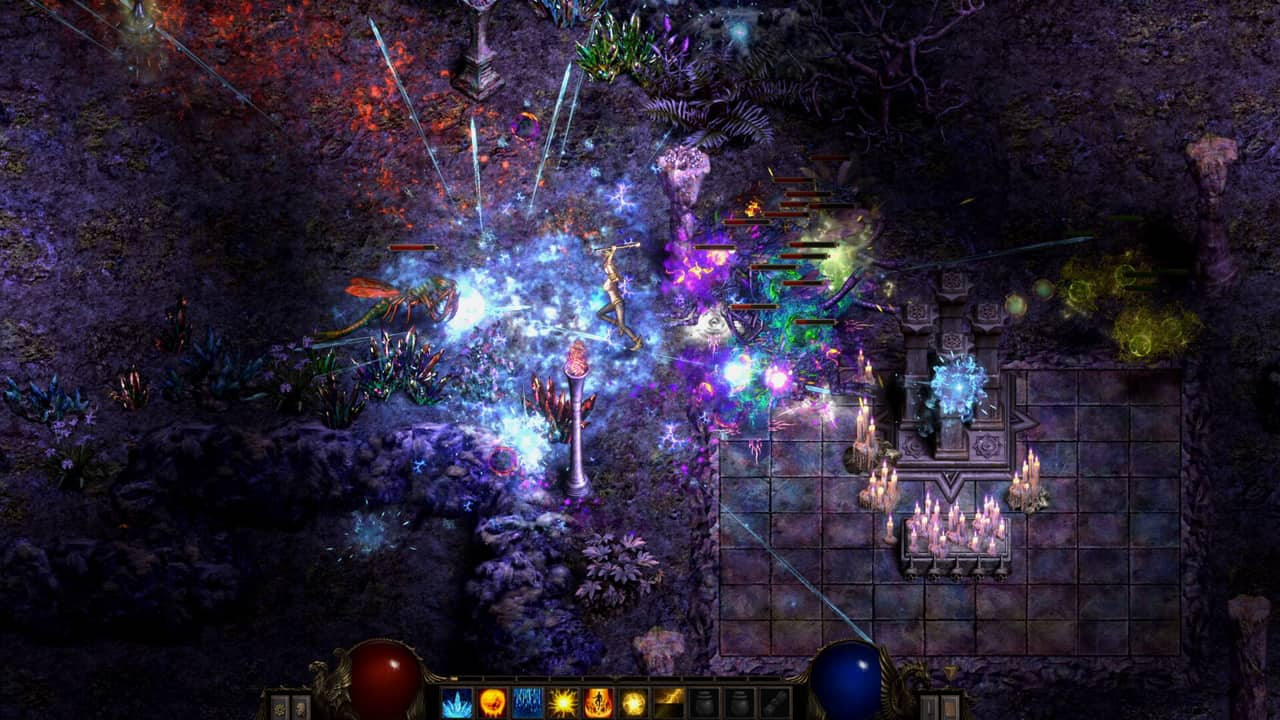
How the Shadow Dungeon Skill Tree Unlocks
Every class has three talent trees, for twelve trees across Mage, Paladin, Ranger, and Necromancer. Deeper bands open after enough points have been invested in the current tree. Read the number printed on the live gate before planning the route, then count every point spent above it as part of the unlock total.
| What you are reading | What it means | What to do |
|---|---|---|
| Tree-wide point gate | The next band needs a total investment inside that tree | Spend through useful branches first, then use one filler point only when it opens a valuable band |
| Overall or global wording | The passive supports the wider character or tree | Prefer it when several active skills share the benefit |
| A node attached to a named skill | The modifier changes that active skill | Take it when that skill drives the build's damage or utility |
| Unlimited late-game skill points | Hybrid allocation can keep expanding after the normal route | Finish the reliable core before spreading into a second tree |
Pre-release footage showed gates at 9, 14, and 29 points. Those numbers explain how the interface works, while the current in-game label remains the exact value to follow.
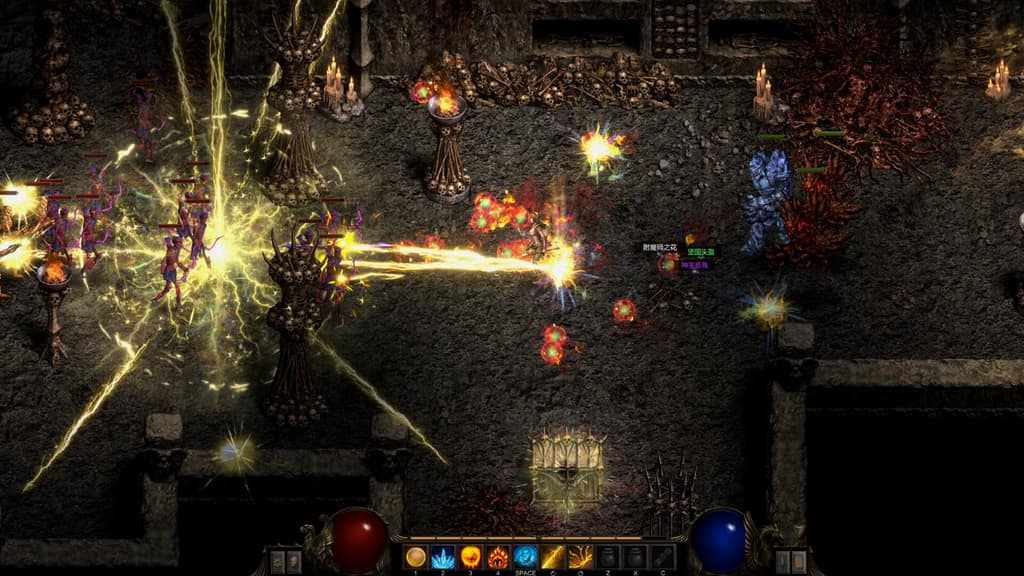
Build a Tree in the Right Order
Start with a working loop, then spend toward the gate that improves it. This keeps every early point tied to an observable result.
- Choose one active skill or effect as the build's main damage loop.
- Read the next point gate in its class tree and trace a path through nodes that already support that loop.
- Add a global passive when several equipped skills benefit, or take the named-skill branch when one skill carries the build.
- Test whether cooldown and duration keep the effect active without exhausting mana.
- Use a reset potion if the route reaches its gate but the combat loop still breaks under pressure.
Shadow Dungeon First Look: Skill Points and Talent Setup
This early-game walkthrough shows the talent interface, point allocation, and reset context behind the workflow above.
The video above is useful for interface orientation. Exact gate values and labels can change from the demonstrated pre-release build, so follow the numbers shown in your current tree.
Choose Global Passives or Skill Modifiers
Use scope as the deciding rule. An overall passive has more value when it improves several parts of the action bar. A named-skill modifier is stronger when that one skill already carries most of the damage, control, or utility.
| Build state | Better first choice | Reason |
|---|---|---|
| Several active skills share cooldown pressure | Global cooldown support | One point improves more than one part of the loop |
| One skill supplies most boss damage | Named-skill damage or behavior modifier | The point strengthens the part that decides the fight |
| The main effect ends before it can overlap | Duration support | More duration can close the inactive gap |
| The loop is ready but cannot be paid for | Resource support or fewer costly nodes | More speed has no value when mana ends the cycle |
A talent tree is healthy when its active loop survives contact with a boss, not only when the tooltip totals look large.
Check Cooldown, Duration, and Mana Together
Cooldown, duration, and mana form one uptime test. Cooldown decides when the skill can be used again. Duration decides how long its effect remains active. Mana decides whether the sequence can repeat. Improving only one layer can leave the same failure in a different place.
Run this check against a durable enemy or another encounter that lasts longer than the opening burst:
- Cast the main sequence once and watch when its key effect ends.
- Check whether the skill is ready again before that effect disappears.
- Repeat the sequence and confirm that mana remains available for the next cycle.
- Treat stable overlap and repeatable resource use as the success state.
If the effect expires first, add duration or reduce its cooldown. If mana ends first, remove a low-value activation or invest in resource support before adding more speed.
Reset Without Restarting Your Character
Pre-release footage showed a Potion of Destruction returning every allocated skill point. Use that reset when the route has a structural problem, such as too many filler nodes, a modifier on a secondary skill, or an uptime loop that cannot be sustained.
Before resetting, write down three things: the main active skill, the next valuable gate, and the exact reason the loop fails. Rebuild those pieces first. Unlimited late-game points make hybrid trees possible, though they do not repair a weak core automatically.
The reset item and its demonstrated behavior come from pre-release footage. Confirm the live item name and description before consuming it in the full release.
Fix a Tree That Looks Strong but Fails
| Symptom | Likely cause | Next check | Recovery |
|---|---|---|---|
| A deeper band stays closed | The tree-wide investment is below the displayed gate | Count points spent inside the current tree | Move a low-value point into the intended tree until the live threshold is met |
| Normal enemies die but a boss outlasts the build | The main effect has a cooldown or duration gap | Watch one full boss cycle | Shift a filler point into uptime support |
| Several skills improve only slightly | Too many points target separate named skills | Identify which skill decides the fight | Keep one main branch and use global support for shared needs |
| The sequence stops after the opening burst | Mana cannot sustain the activation rate | Repeat the full rotation twice | Reduce low-value casts or add resource support before more cooldown |
| A reset recreates the same failure | The route changed but the limiting layer did not | Name the exact failed check before spending | Rebuild only after cooldown, duration, or mana has a clear target |
What Is Confirmed in the Full Release
The current official feature set confirms four classes, twelve talent trees, and unlimited late-game skill points. The detailed gate numbers, Potion of Destruction behavior, global-passive wording, and named-skill branch examples were observed in pre-release footage.
Use those observations to read the interface and diagnose a route. Let the current tree label and item description decide exact spending and reset choices when the live build differs.
Was this helpful?
Continue reading
These related Shadow Dungeon pages answer the next questions around this topic.